
Atlanta welcomes soldiers of WWI Camp Gordon at Christmas
As the Christmas season approached in 1917, The Atlanta Georgian newspaper suggested local families invite soldiers from Camp Gordon to their homes for Christmas dinner. “The Georgian’s idea is that we should make this Christmas a ‘Soldier’s Christmas’ by taking the boys in brown into our homes and closer to our firesides and into our hearts on Christmas Day.” (Atlanta Georgian, Nov. 23, 1917, “All Atlanta for big Christmas for soldiers”)
Camp Gordon, a World War I training camp in Chamblee, was located on land that is now DeKalb Peachtree Airport and beyond. In December 1917, 25% of the men were given passes to leave Camp Gordon for 38 hours during Christmas. Many were able to enjoy Christmas dinner with generous Atlanta families. Those who received a longer pass due to unusual circumstances traveled by train to visit family.
At 4 p.m. December 24, 1917, the bugle sounded and marches, drills, and rifle training paused until December 26 at 7 a.m. Eight thousand men headed to downtown Atlanta on the trolley or in cars. Other soldiers stayed on base where entertainment and a Christmas feast was planned.
The camp was decorated with multiple Christmas trees provided by women’s church and social groups. Religious services and celebrations took place at the YMCA and Knights of Columbus buildings, the base hospital and the infirmaries.
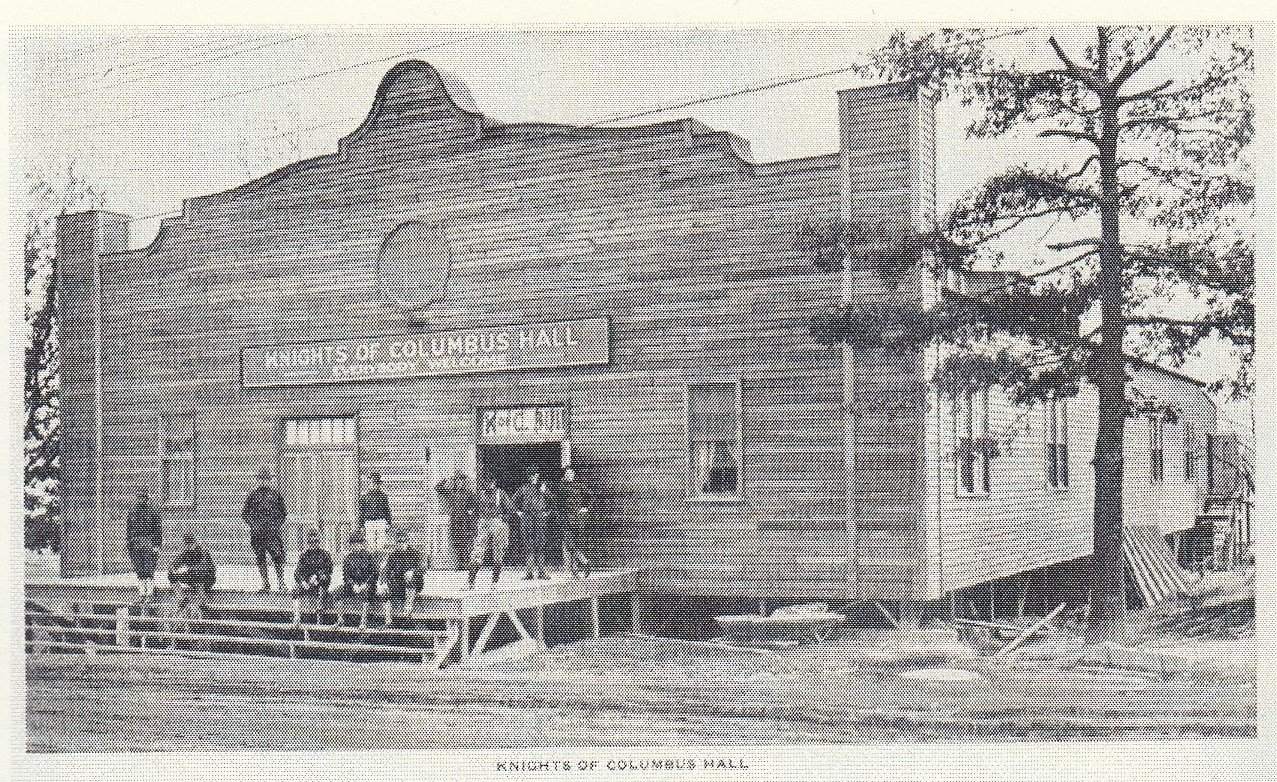
Knights of Columbus Hall at World War I Camp Gordon, located in Chamblee, GA.
Christmas dinner was served December 24, 1917, and featured roast turkey and boiled ham as the entrees. The side dishes were cranberry sauce, dressing, rice and gravy, green peas, corn and candied sweet potatoes. Dessert included lemon, apple and mince pie. Fruit, layer and mince cake were served. Plenty of fresh fruit, celery, olives and nuts were also included on the menu. (The Atlanta Constitution, Dec. 24, 1917, “Camp Gordon News”)
According to historian Franklin Garrett’s “Atlanta and Environs,” soldiers who did not have an invitation to stay with a family or a hotel room spent Christmas Eve night at the downtown YMCA. It was so crowded, some had to sleep on the floor. Christmas Day 1917 in Atlanta did not offer much entertainment for visiting soldiers, because stores, offices, and public buildings were closed.
A building for Jewish soldiers was completed in October 1918 and became known as the Little White House. The Jewish Welfare Board began work to improve the social and religious life of Jewish soldiers in early 1918. All soldiers were welcome at the Little White House. (Hearst’s Sunday American, Oct. 27, 1918, “Air of Home Permeates Little White House at Gordon”)
By Christmas 1918, WWI had ended. Many soldiers were given ten-day furloughs. Those who remained were entertained with Christmas dinner, music and dancing. They were also invited to gather at the YWCA Hostess House.